Christian-History.org does not receive any personally identifiable information from the search bar below.
Gnosticism
Welcome to the crazed world of gnosticism; where God produces gods that don't know God; where the earth—in fact, all the material universe—is a big mistake; where new versions of religion are invented daily …
… and where history is whatever you want it to be.
Ad:
Our books consistently maintain 4-star and better ratings despite the occasional 1- and 2-star ratings from people angry because we have no respect for sacred cows.
On this page we'll be discussing the history of the gnostics themselves. Gnostic beliefs have their own page, though they're touched on here! You can also see my page of quotes about the gnostics, which will continue to grow for quite a while.
The Early Christian Version
of the Origin of Gnosticism
Philip's Incredible Power
I live in the USA, one of the most unbelieving countries in the world.
When I speak of the incredible power of Philip the evangelist, most Americans don't believe it. Even among many Christians, they wink and nod, knowing that Philip didn't really work a bunch of miracles.
Twenty years ago, when I lived in Germany, I used to listen to stories told by refugees from Ghana and Nigeria and by a dear friend from Surinam. I found it incredible that they even dared to tell the stories they told.
But now I've been there. I've been to Africa; I've been to India.
There is power available when you are among a people who believe. On our last trip to Africa, we prayed for an older man in the hospital. The next morning he pulled all his tubes, jumped out of bed, told the staff he was well, and forced his way home. To this day, he's doing just fine.
This isn't someone we heard about. This is a close relative of a friend that we are in constant contact with.
Philip really worked those miracles, my friend. He really amazed Simon, who had likely learned trickery but would have preferred real power.
Christians of the 2nd and 3rd century had a very clear picture of how the gnostic religion began.
When the apostles Peter and John went to Samaria to baptize the new believers there (Acts ch. 8), they found a former magician named Simon. Simon had been converted when he saw Philip's incredible power.
The problem is that Simon's interest was not Jesus, but Jesus' miraculous power. So when he saw the apostles arrive, lay hands on the new converts, and those converts become filled with the Spirit of God, he was very interested. He offered them money if they would share that power with him.
This didn't go over very well with Peter.
"Your money perish with you because you thought the gift of God could be purchased with money!" (Acts 8:20).
Simon was stricken, and he asked the apostles to pray, but not for his forgiveness. He asked the apostles to pray that "none of these things would come upon me."
Today we wonder what happened to Simon. Did he repent? Was he lost?
The early Christians didn't wonder.
Simon and Gnosticism
As "the Church that is one" (the united churches of the apostles) tells it, Simon did not repent; at least not in the long run.
As he learned the teaching of the apostles, he adapted it to his own situation. He went back to proclaiming that he himself was the great power of God, but with a twist: Jesus had not redeemed the world when he died; his death was simply the failure of his mission.
When Jesus failed, the Christ-spirit that was on him left to seek a new person to empower so that the message could continue.
Whom did he find but Simon the magician?
There's no way to know Simon's original message fully, but he trained a man named Menander, who carried on his message in Antioch. Justin Martyr says that there was a statue erected by the Romans to Simon as a god:
He was considered a god, and as a god was honored by you [Romans] with a statue, which statue was erected on the river Tiber [in or near Rome], between the two bridges, and bore this inscription in the language of Rome: Simoni Deo Sancto—"to Simon, the holy god."
Almost all the Samaritans—plus a few of other nations—worship him and acknowledge him as the first god. (Apology 26)
To the early church, Simon was the founder of the gnostics, the father of all heretics.
Since writing this page, I wrote a blog post where I can be more polemical about this subject.
I sure hope I used "polemical" right.
Is Their History Accurate?
Due to the revived interest in gnosticism today—a new, invented, and cleaned up history—there are many claiming that the early Christian description of the gnostic history is inaccurate. They like to say that the victors writes their own history, and it can't be trusted.
The problem with that statement is that the history of the gnostics wasn't written after the Church was victorious. Books like Against Heresies by Irenaeus (roughly A.D. 185) and Prescription Against Heretics, Against Marcion, and Against the Valentinians by Tertullian (roughly A.D. 205) were written to combat gnosticism while it was still alive and active.
Irenaeus' book against the gnostics was addressed to the bishop of Rome in order to help him combat heresy in his church. It would have done Irenaeus no good to be inaccurate in his description of gnostic beliefs and practices.
Irenaeus writes:
I have deemed it my duty, after reading some of the commentaries … of the disciples of Valentinus and after acquainting myself with their tenets through personal interaction with some of them, to unfold to you, my friend, these … mysteries … I do this so that you … may in turn explain them to all those with whom you are connected and exhort them to avoid such an abyss of madness and blasphemy against Christ. (Against Heresies I:preface:2)
How would it help Irenaeus' cause if he was inaccurate in what he passed on from the Valentinians?
Did Irenaeus Misrepresent Gnostic Teachings?
A check of Irenaeus against the sources of views he challenged reveals that he described those views accurately. Many of the details of views noted in other fathers also stand corroborated.
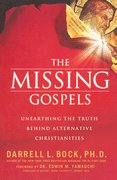
– Darrell L. Bock, Ph.D., The Missing Gospels, p. 48
It's clear as one reads through the first two books of Against Heresies that Irenaeus has thoroughly done his homework. He knows many of the nuances of their teachings, and he explains their arguments in defense of those teachings thoroughly. I doubt that anyone who reads his book could believe Irenaeus is simply slandering the gnostics.
No, he's studied their teachings well.
I've heard similar statements by Jehovah's Witnesses and Mormons when I've read books about their beliefs. They tell me that those books are inaccurate, but I've spent many hours talking with Mormons and Jehovah's Witnesses—the same ones who said those books are inaccurate—and I can tell you that I've found virtually nothing in "cult watch" books that misrepresent their beliefs.
The church fathers … sometimes were inaccurate about what was taking place, especially when it came to treating all heresies as coming from a singular root.
– Darrell L. Bock, Ph.D., The Missing Gospels, p. 48
When it comes to doctrines, however, the writings of men like Irenaeus—and most prominent "cult watch" groups today—bear the marks of accuracy in the matter of explaining gnostic doctrine.
In fact, reading original gnostic writings doesn't make things any better. If anything, once we read those writings, gnosticism looks even worse.
Were the Gnostics Really Founded by Simon the Magician?
We cannot assume that the early Christian belief that Simon the magician started the gnostics is accurate. That could easily have been a rumor.
As I've begun to read some of the more popular ancient gnostic writings, it's become apparent that they have little to worry about from Irenaeus. Their own writings are far worse!
Listen to this gem that begins the Pistis Sophia:
Jesus his disciples, "I am come forth out of that first mystery, which is the last mystery, that is the four-and-twentieth mystery." And his disciples … thought of that mystery, that it is the head of the universe and head of all existence; and they thought it is the completion of all completions … that it surroundeth the First Commandment and the five Impressions and the Great Light and the Five Helpers and the whole Treasury of the Light.
Wow.
The Gospel of Thomas is full of worse nonsense than this. The Gospel of Mary Magdalene is a little better because what's left of it doesn't address much doctrine.
I can only guess these gnostic writers like to write in a trance-like state or something, saying things that sound "heady," but that are either useless or complete nonsense.
We also cannot know when the gnostics got their start because there are no gnostic documents known to predate the New Testament. The New Testament itself, however, clearly indicates that their ideas were taking root by A.D 55 or so (re: 1 Cor. 15), and that it was thriving in some churches by the late 1st century (re: 1 John and Rev: 2-3). Ignatius discusses the gnostic problem thoroughly in seven letters written in A.D. 110, where he prescribes adherence to the bishop as a solution.
Between the discussion of a physical resurrection in 1 Cor. 15, the issues addressed by John in 1 John, those addressed by Ignatius, and the full-fledged descriptions given by Irenaeus and Tertullian—spread across a century—a very consistent picture emerges of gnostic teachings.
Gnostic doctrine strongly emphasized the distinction between flesh and spirit, regarding all created matter as evil. They rejected the God of Israel, refusing to believe that he was the Father of Jesus Christ, and they eventually constructed a system of spiritual beings, called "æons," whose interaction with the created world would bring salvation. The means of salvation, the teachings, the meetings, and the methods of gnostic teachers varied from teacher to teacher, and many of their specific practices will always remain unknown.
However, the crazy doctrinal system, based on secret knowledge supposedly passed on by Jesus without the apostles' knowledge, is accurately portrayed by the early Christians. There can be little doubt of that.
Gnostic Teachers
Numerous other famous gnostic teachers are mentioned in the early Christian writings:
- Carpocrates was around in John's time. There are numerous obvious references to gnostic doctrines in John's letters, which were written in the late first century.
- Justin Martyr mentions that Marcion was around in his time, A.D. 155. (I have a well-written book that argues that Marcion was not gnostic, but we'll discuss that on a different page later.)
- Irenaeus wrote a whole book against gnosticism in the 180's. He mentions numerous names, most notably Valentinus, Ptolemy, and Marcus.
Gnostic Gospels and Writings
Here we'll address some of the gnostic or —secret— gospels and writings, the supposed "lost books of the Bible." I'll add pages here and there as I have time. Please use the "contact me" button to the left if you'd like me to address any one specifically.
- Gospel of Thomas; (I also added a page concerning it's quotation in 2 Clement)
- Gospel of Mary Magdalene
- Pistis Sophia

Recent Articles


-
The Role of Early Church Unity in Strengthening Modern-Day Faith
Dec 24, 25 01:51 PM
The Role of Early Church Unity in Strengthening Modern-Day Faith covers unity in early Christian history and modern application -
FAQ: How to Start Reading the Early Church Fathers
Jun 02, 25 04:01 PM
 People often ask me how to start reading the early church fathers. Here's the answer.
 -
Scripture Quotes About the Atonement
Jan 04, 25 12:22 PM
Scripture quotes about the atonement of Jesus Christ
"I can say that I never knew what joy was like until I gave up pursuing happiness, or cared to live until I chose to die. For these two discoveries I am beholden to Jesus."
– Malcolm Muggeridge

Early Church History Newsletter
You will be notified of new articles, and I send teachings based on the pre-Nicene fathers intermittently.
When you sign up for my newsletter, your email address will not be shared. We will only use it to send you the newsletter.