Christian-History.org does not receive any personally identifiable information from the search bar below.
Apologetics: Answering Heresies & Exposing Cult Watch Groups
Apologetics is the study and practice of defending the Christian faith.
Ad:
Our books consistently maintain 4-star and better ratings despite the occasional 1- and 2-star ratings from people angry because we have no respect for sacred cows.
Many groups today claim to be apologists. They call themselves "cult watch" groups, and they have assigned themselves the task of defending the "historic Christian faith" from "cults" like the Mormons, the Jehovah's Witnesses, and the Way International.
"Cult"
People get very offended over the word "cult." I was a member of Rose Creek Village, a Christian community, for about 15 years, and the word was used of us often. Usually the deep-down meaning of the word was "I don't understand you, you frighten me, and i will do everything I can not to deal with you."
There are three definitions of "cult" in common usage:
- Any religious group with a common belief among its members.
- A religious group that disagrees with fundamentalist Protestant evangelicals, usually those of the Reformed faith (i.e., holding to John Calvin's teaching).
- A dangerous religious group that abuses or exercises unacceptable control over its members.
I am not calling anyone a "cult" on this page. This page is directed at "cult watch" groups, usually fundamentalist evangelicals, and when I write "cult," always in quotes, I am simply referring to the fact that they call others "cult" while they fall into their own definition of a "cult."
That said, I want to make it clear that I reject the teachings of the Church of Jesus Christ of Latter Day Saints (the Mormons) as well as those of the Jehovah's Witnesses. The have rejected the faith of the apostles, the historic Christian faith that this site supports and to which I have given my life. I suppose they would have to agree because both organizations accuse the apostles' churches of falling away immediately after the time of the apostles.
Defending the Faith
Defending the faith is noble and commanded by Scripture …
Contend earnestly for the faith once for all delivered to the saints. (Jude 3)
One question, however, must be asked: What was the faith once for all delivered to the saints?
Apologetics and the Historic Christian Faith
Unfortunately, most of those who claim to practice apologetics either don't know or don't care what it is.
I'll just be blunt with you. If you were part of a church that emphasized salvation by faith alone, a born again experience that is separate from baptism, and a baptism that is a symbolic public testimony, would you want to know that none of those doctrines are historic?
Most apologetics ("cult watch") groups are fundamentalist evangelicals. My experience with Christ—a very real and powerful experience—began in a fundamentalist evangelical church. As of Christmas 2023, I am part of an evangelical church.
I hang out with evangelicals because I know what matters on the last day is that I lived my life for Christ, not that my theology was perfect ... or even good (e.g., Matt. 25:31-46). I have found it easier to find people who encourage each other to live holy among the evangelicals, but don't get me wrong. It is hard, among evangelicals, Catholics, or Orthodox believers, to find people who "exhort one another day by day ... lest any be hardened by the deceitfulness of sins" (Heb. 3:13).
It is even harder to find a church that practices Hebrews 10:24-25, the members provoking "one another" to love and good works at their assemblies and encouraging one another. Evangelicals, Catholics, and Orthodox alike keep practicing there traditions on Sunday morning week after week, ignoring Hebrews 10:24-25 except to misquote the middle of a sentence, "not forsaking the assembling of yourselves together," as though the passage taught Christians to rush to a pew be quiet every Sunday.
With that complaint out of the way, while Roman Catholics and Orthodox have added all sorts of tradition to the faith once for all delivered to the saints (Jude 1:3), evangelicals have built most of their theology on unscriptural traditions.
Salvation by faith alone, as taught by apologetics groups like the Christian Research Institute, is not true and is directly rejected by James, the Lord's brother, in the Bible (James 2:24). (In fact, at this point, Hank Hanegraaff, CRI's director, has rejected the doctrine and converted to Eastern Orthodoxy). I will add here that any self-proclaimed apologist who twists "You see then that by works, a man is justified, and not only by faith" into "We are saved by faith alone, but not by a faith that is alone" has no business pretending to be an apologist. Instead, such a person is simply practicing the craftiness and cunning of men described by Paul in Ephesians 4:13.
I can't be certain that you have heard that James really meant "we are saved by faith alone, but not by faith that is alone" when he wrote "not by faith only," but I have heard it repeatedly. It is the most common twisting of James 2:24 that I have heard, though I have heard several.
The worst thing of all, though, is trying to get an evangelical to repeat James 2:24 verbatim. I have asked supposed Bible believers to say, "We are justified by works and not by faith only," but I have never gotten an evangelical to be willing to do so.
For those wondering about passages like Romans 3:28; Ephesians 2:8-9; and Titus 3:5, see my explanation of the historic doctrine of salvation by faith.
The point here is, though, that most "cult watch" groups have no idea what the historic Christian faith is. Their apologetics are a defense of Protestant tradition, not research into the faith as it was once for all delivered to the saints.
Christian Research Institute
I'm adding this note on Christmas break, 2023. Much may have changed about CRI since Hank Hanegraaff converted to Eastern Othodoxy. Nonetheless, the story below really happened.
In 1990, I wrote the Christian Research Institute to ask them why they claimed to defend the historic Christian faith but taught symbolic baptism. I told them that if any historic doctrine was obvious, that one was.
They wrote back and, without any references, informed me that their view was historic. In response, I sent them abundant evidence that they were wrong.
They sent me one final letter stating that the historic Christian faith is whatever the Scriptures teach, thus completely undermining the entire basis of their argument against "cults."
The reason for their appeal to the historic Christian faith is to establish what is the correct interpretation of the Scriptures against "cult" interpretations; however, if apologetics groups fail to follow the testimony of history, then how can they oblige JW's or Mormons to follow it?
There is not one Scripture suggesting baptism is symbolic, and almost every Scripture on baptism clearly states it is not just symbolic. The same is true of early church teaching on the subject. In fact, no one teaches a symbolic baptism or separates it from regeneration until at least the 17th century.
Baptism in water and the regeneration experience were clearly tied together in the eyes of all Christians until sometime after the Reformation. Before that, everyone believed that Jesus was talking about water baptism when he mentioned the new birth in John 3:3-5. Even Titus 3:5, which mentions "the washing of regeneration," was universally understood to refer to water baptism.
Scripture Interpretation and Historic Christianity
In Protestant churches it is common to appeal to the Scriptures apart from the historic witness of any church or any Christians as a source of authority. I do not want to argue that on this page.
On this page, I want to point out that apologetics groups claim to be teaching the historic Christian faith, not just what they believe the Scriptures to teach. They regularly refer to the great creeds and councils of Christianity as a standard of orthodoxy.
Those who are willing to be that confident (I hesitate to say arrogant, although I am certain that is how God sees it) of their Bible interpretation can take a stand against what the Christ's churches have historically believed. But you cannot set the historic Christian faith as a standard for Mormons, Jehovah's Witnesses, and other "cults," when you do not abide by it or believe it yourself!
Early Christian Apologetics
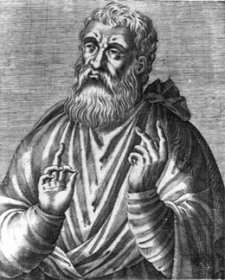 Justin Martyr
The mid to late 2nd century Christian writers are known as the apologists. All of them appealed to the historic Christian faith.
The earlier apologists, such as Justin, didn't need to bother with researching the historic faith. For him and others of his age, just 50 years after the last apostle died, the historic Christian faith was still just what "we have been taught."
- God, the Father … and the Son … and the prophetic Spirit, we worship and adore … declaring without grudging to every one who wishes to learn, as we have been taught. (First Apology 14)
- We have been taught that God did not make the world aimlessly, but for the sake of the human race. (Second Apology 4)
- I consider it reasonable to recur to our progenitors … who have taught us nothing from their own private fancy … but without wrangling and contention received from God the knowledge which also they taught to us. (Hortatory Address to the Greeks 8)
Later apologists, like Irenaeus and Tertullian, stated more precisely that they were leaning on a historic faith:
You shall have from me a very copious refutation of all the heretics, and you shall faithfully and strenuously resist them in defense of the only true and life-giving faith, which the Church has received from the apostles and imparted to her sons. (Irenaeus, Against Heresies III:preface)
We hold communion with the apostolic churches because our doctrine is in no respect different from theirs. This is our witness of truth. (Tertullian, Prescription Against Heretics 21)
I have to point out here that the Roman Catholic Church has corrupted this into a teaching that Christians must follow one particular church and one particular bishop, no matter what he teaches, because God will lead that church into truth. This is not what the early church taught. They taught that the churches of God, formed by the apostles, were witnesses to the teaching that was handed down to the Church.
The apologists referred to this apostolic teaching as the rule of faith or the apostolic tradition.
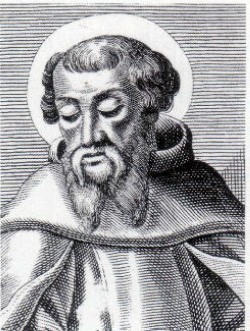 Irenaeus, bishop of Lyons
It is not that tradition has more authority or equal authority with Scripture. It is that tradition—if it can be shown to have come from the apostles and been handed down by the Church—judges interpretation of the Scriptures. This is proper apologetics …
With whom lies that very faith to which the Scriptures belong? From what and through whom, and when, and to whom, has been handed down that rule, by which men become Christians? For wherever it shall be manifest that the true Christian rule and faith shall be, there will likewise be the true Scriptures and expositions thereof, and all the Christian traditions. (Tertullian, ibid. 19)
Then, like now, heretics argued that it is the true church that corrupts the Scriptures and their interpretation, not themselves …
It is indeed a necessary consequence that they should go so far as to say that adulterations of the Scriptures, and false expositions thereof, are rather introduced by ourselves, inasmuch as they, no less than we, maintain that truth is on their side. (ibid. 18)
Proper apologetics, then, points to the historic Christian faith. What did the churches of the apostles believe?
That is not as easy to determine today as it was in Tertullian's day. Tertullian could go to a church formed by the apostles and ask what they had taught. He could compare it both with Scripture and the writings of those who had come before him, such as Clement, the Letter of Barnabas, and other writings.
Though it is more difficult today, it is not exceptionally difficult. We have those writings available ourselves. We have Tertullian's writings as well. Eusebius, in his Church History in A.D. 323, preserved many quotes from writings no longer available today.
Those writings are consistent, and they testify to one carefully defined and limited faith that is the faith for which Jude commanded us to earnestly contend.
Apologetics and Modern Heresies
 A Jehovah's Witness Kingdom Hall in England
Apologetics is still needed. There are modern heresies.
At what point have groups like the Jehovah's Witnesses and Mormons wandered from the faith? What about unusual groups that are not usually considered "cults," like the United Pentecostals or the Church of Christ, which divides from all other denominations?
These questions apologetics will answer only through a knowledge of the historic Christian faith as found in the rule of faith.

Recent Articles


-
The Role of Early Church Unity in Strengthening Modern-Day Faith
Dec 24, 25 01:51 PM
The Role of Early Church Unity in Strengthening Modern-Day Faith covers unity in early Christian history and modern application -
FAQ: How to Start Reading the Early Church Fathers
Jun 02, 25 04:01 PM
 People often ask me how to start reading the early church fathers. Here's the answer.
 -
Scripture Quotes About the Atonement
Jan 04, 25 12:22 PM
Scripture quotes about the atonement of Jesus Christ
Early Church History Newsletter
You will be notified of new articles, and I send teachings based on the pre-Nicene fathers intermittently.
When you sign up for my newsletter, your email address will not be shared. We will only use it to send you the newsletter.