Christian-History.org does not receive any personally identifiable information from the search bar below.
Quotes by Martin Luther on Salvation by Faith Alone
1520
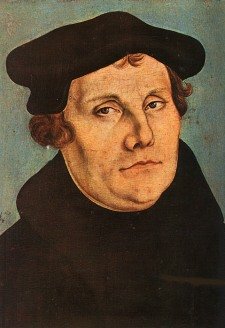
We find many who pray, fast, establish endowments, do this or that, lead a good life before men, and yet if you should ask them whether they are sure that what they do pleases God, they say, "No"; they do not know, or they doubt. And there are some very learned men, who mislead them, and say that it is not necessary to be sure of this; and yet, on the other hand, these same men do nothing else but teach good works. Now all these works are done outside of faith, therefore they are nothing and altogether dead. For as their conscience stands toward God and as it believes, so also are the works which grow out of it. Now they have no faith, no good conscience toward God, therefore the works lack their head, and all their life and goodness is nothing. Hence it comes that when I exalt faith and reject such works done without faith, they accuse me of forbidding good works, when in truth I am trying hard to teach real good works of faith. (A Treatise on Good Works)
Ad:
Our books consistently maintain 4-star and better ratings despite the occasional 1- and 2-star ratings from people angry because we have no respect for sacred cows.
The priest is not made. He must be born a priest; must inherit his office. I refer to the new birth—the birth of water and the Spirit. Thus all Christians must became priests, children of God and co-heirs with Christ the Most High Priest. … The Christian priesthood costs life, property, honor, friends and all worldly things. It cost Christ the same on the holy cross. (The Complete Sermons of Martin Luther, vol. IV, "First Sunday after Epiphany," p. 9)
As I have frequently stated, the suffering and work of Christ is to be viewed in two lights: First, as grace bestowed on us, as a blessing conferred, requiring the exercise of faith on our part and our acceptance of the salvation offered. Second, we are to regard it as an example for us to follow; we are to offer up ourselves for our neighbors' benefit and for the honor of God. This offering is the exercise of our love—distributing our works for the benefit of our neighbors. He who does so is a Christian. He becomes one with Christ, and the offering of his body is identical with the offering of Christ's body. (The Complete Sermons of Martin Luther, vol. IV, "First Sunday after Epiphany," p. 9)
The offering of [the body] is called a spiritual sacrifice because it is freely sacrificed through the Spirit, the Christian being uninfluenced by the constrainst of the Low or the fear of hell. (The Complete Sermons of Martin Luther, vol. IV, "First Sunday after Epiphany," p. 10)
That's the way things will be, says Christ, when Judgment Day nears. The whole world will act secure. Don't let this disturb you. Christ admonishes, do not follow them; do not do what they are doing; cling to me. Nor be afraid; keep your head high, and see to it that, when I come down from heaven, I shall be able to find you! … But those who overload their hearts and show no concern for Judgment Day will find that death has suddenly overtaken them. The fellow who frolics and dances merrily with his wench, will then suddenly find himself flat on his face, and, while his next-door neighbor counts his shekels of silver and gold, he will suddenly be knocked down with his money bags and all. That's what the situation will be like at that time. (The Complete Sermons of Martin Luther, vol. V, p. 40)
1528
This faith alone, when based upon the sure promises of God, must save us; as our text clearly explains. And in the light of it all, they must become fools who have taught us other ways to become godly. ... Man may forever do as he will, he can never enter heaven unless God takes the first step with his Word, which offers him divine grace and enlightens his heart so as to get upon the right way. (On Faith and Coming to Christ)
Should one imagine he is able to do anything good of his own strength he does no less than make Christ the Lord a liar. (On Faith and Coming to Christ)
1530
God will avenge and severely punish the haughty rebellion of all who misuse the gospel, rich or poor. Would to God, that the punishment could be delayed for a while by our prayers! … Rebellion is so great and widespread that God will have to put a stop to it. No amount of warning or admonition, pleading or begging, no amount of threats or punishments by either spiritual or secular authority will do any good; God himself will have to step in with avenging judgment to punish and put an end to such wickedness. (Complete Sermons of Martin Luther, vol. VII, "Twenty-Second Sunday after Trinity," par. 31)
1531
In my heart reigns this one article, faith in my dear Lord Christ, the beginning, middle and end of whatever spiritual and divine thoughts I may have, whether by day or by night. (Commentary on Galatians, Introduction)
St. Paul wrote this epistle because, after his departure from the Galatian churches, Jewish-Christian fanatics moved in, who perverted Paulís Gospel of manís free justification by faith in Christ Jesus. (Commentary on Galatians 1:1)
Paul is so eager to come to the subject matter of his epistle, the righteousness of faith in opposition to the righteousness of works, that already in the title he must speak his mind. (Commentary on Galatians 1:1)
Christ, whom God the Father has raised from the dead is our righteousness and our victory. (Commentary on Galatians 1:1)
The article of justification must be sounded in our ears incessantly because the frailty of our flesh will not permit us to take hold of it perfectly and to believe it with all our heart. (Commentary on Galatians 1:3)
Grace remits sin, and peace quiets the conscience. Sin and conscience torment us, but Christ has overcome these fiends now and forever. … These two terms, grace and peace, constitute Christianity. Grace involves the remission of sins, peace, and a happy conscience. (Commentary on Galatians 1:3)
Sin is not canceled by lawful living, for no person is able to live up to the Law. The Law reveals guilt, fills the conscience with terror, and drives men to despair. Much less is sin taken away by man-invented endeavors. The fact is, the more a person seeks credit for himself by his own efforts, the deeper he goes into debt. Nothing can take away sin except the grace of God. In actual living, however, it is not so easy to persuade oneself that by grace alone, in opposition to every other means, we obtain the forgiveness of our sins and peace with God. (Commentary on Galatians 1:3)
The righteousness of the Law which Paul also terms the righteousness of the flesh is so far from justifying a person that those who once had the Holy Spirit and lost Him, end up in the Law to their complete destruction. (Commentary on Galatians 3:3)
The faith of the fathers in the Old Testament era, and our faith in the New Testament are one and the same faith in Christ Jesus, although times and conditions may differ. Peter acknowledged this in the words: “Which neither our fathers nor we were able to bear? But we believe that through the grace of the Lord Jesus Christ we shall be saved, even as they” (Acts 15: 10, 11). And Paul writes: “And did all drink the spiritual drink; for they drank of that spiritual Rock that followed them: and that Rock was Christ” (I Cor. 10:4). And Christ Himself declared: “Your father Abraham rejoiced to see my day: and he saw it and was glad” (John 8:56). The faith of the fathers was directed at the Christ who was to come, while ours rests in the Christ who has come. (Commentary on Galatians 3:6)
Do you now see how faith justifies without works? Sin lingers in us, and God hates sin. A transfusion of righteousness therefore becomes vitally necessary. This transfusion of righteousness we obtain from Christ because we believe in Him. (Commentary on Galatians 3:6)
That means you are no longer in the kingdom or condition of grace. When a person on board ship falls into the sea and is drowned it makes no difference from which end or side of the ship he falls into the water. Those who fall from grace perish no matter how they go about it. Those who seek to be justified by the Law are fallen from grace and are in grave danger of eternal death. If this holds true in the case of those who seek to be justified by the moral Law, what will become of those, I should like to know, who endeavor to be justified by their own regulations and vows? They will fall to the very bottom of hell. ...
The words, “Ye are fallen from grace,” must not be taken lightly. They are important. To fall from grace means to lose the atonement, the forgiveness of sins, the righteousness, liberty, and life which Jesus has merited for us by His death and resurrection. To lose the grace of God means to gain the wrath and judgment of God, death, the bondage of the devil, and everlasting condemnation. (Commentary on Galatians 5:4)
1533
Christ says if your concept of mercy is no better than that of the Gentiles, you will not inherit eternal life. (Complete Sermons of Martin Luther, vol. VI, pp. 269-70)
1545
Faith is not that human illusion and dream that some people think it is. When they hear and talk a lot about faith and yet see that no moral improvement and no good works result from it, they fall into error and say, "Faith is not enough. You must do works if you want to be virtuous and get to heaven." The result is that, when they hear the Gospel, they stumble and make for themselves with their own powers a concept in their hearts which says, "I believe." This concept they hold to be true faith. But since it is a human fabrication and thought and not an experience of the heart, it accomplishes nothing, and there follows no improvement.
Faith is a work of God in us, which changes us and brings us to birth anew from God (cf. John 1). It kills the old Adam, makes us completely different people in heart, mind, senses, and all our powers, and brings the Holy Spirit with it. What a living, creative, active powerful thing is faith! It is impossible that faith ever stop doing good. Faith doesn't ask whether good works are to be done, but, before it is asked, it has done them. It is always active. Whoever doesn't do such works is without faith; he gropes and searches about him for faith and good works but doesn't know what faith or good works are. Even so, he chatters on with a great many words about faith and good works. ("Preface to the Letter of St. Paul to the Romans"; ed. Hans Volz and Heinz Blanke, translated by Bro. Andrew Thornton)

Recent Articles


-
I Desire Mercy Not Sacrifice
Apr 22, 24 08:28 PM
Why did Hosea prophesy, 'I desire mercy and not sacrifice,' and why did Jesus quote it twice in the Gospel of Matthew? The answer may shock you. -
Reconciling the Evangelical Paul with the Biblical Paul
Mar 25, 24 12:53 PM
Paul does not need to be reconciled with James because he says all the things James does. We need to reconcile the evangelical Paul with the biblical Paul. -
How to Live Holy
Feb 28, 24 12:06 PM
The Bible clearly teaches us how to live holy by his grace, by the Holy Spirit, the fellowship of the church. It also calls us to make every effort.
Early Church History Newsletter
You will be notified of new articles, and I send teachings based on the pre-Nicene fathers intermittently.
When you sign up for my newsletter, your email address will not be shared. We will only use it to send you the newsletter.