Christian-History.org does not receive any personally identifiable information from the search bar below.
History of the Bible
This is the third time I'm writing this page on the history of the Bible.
There's so much to say, and I can't seem to get it outlined. The facts just don't distribute themselves into neat boxes, neither by subject nor chronologically. (I'm done with the whole page now, and I'm very happy with how it turned out!)
Modern Christians use "The Word of God" interchangeably with the Bible. In other words, you can simply say you "follow the Word," and everyone assumes you mean the Bible. That is not how the apostles and their churches used the term!
So let's try this. I'm going to list the various subjects concerning the history of the Bible—some related, some not related—in bullet points with links to more complete explanations further down the page.
One of the great blessings of the modern age is the availability of the Bible and other books, as well as widespread literacy. One of our friends provides help reading for those with learning disabilities, like Asperger's, Dyslexia, Autism, and ADD/ADHD.
- Definitions You'll Need
- How Did a Writing Qualify as New Testament Scripture?
- The Gospels
- The New Testament Canon (lists)
- Did the Apostles' Churches Have a Set Canon?
- Interesting Facts from the History of the Bible
- Paul's Letters
- General Epistles (Hebrews through 3 John)
- Hebrews
Ad:
Our books consistently maintain 4-star and better ratings despite the occasional 1- and 2-star ratings from people angry because we have no respect for sacred cows.
Definitions You'll Need
- Canon
- Canon literally means "rule," and in the history of the Bible it is used to refer to the list of books that are accepted by a church as Scripture. It is not to be confused with "cannon," a large weapon.
- Apocrypha
- Apocrypha literally means "hidden," but it was used in many ways even in ancient times. Jerome himself applies it to both non-canonical and deuterocanonical books. Today it's either used in general of all books that have had a claim to be in the Scriptures but are currently rejected, or it's used of the specific books contained in the Roman Catholic Bible but which are not in the Protestant Bible.
- Deuterocanonical
- Deuterocanonical literally means "second canon." It originally was meant to denote a class of books that were between the canonical and non-canonical books. In other words, they were "somewhat" inspired or authoritative, but not fully so. Now the term has come to be almost synonomous with "apocrypha," meaning a long list of books that have been accepted as Scripture at some time in the past but are not now.
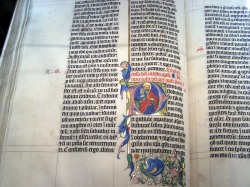
How Did a Writing Qualify as New Testament Scripture?
What I'm about to say is disputed by most books addressing the history of the Bible.
I'm going to say it anyway, as I don't believe that any of them have presented anything but conjecture for their opinion, while the evidence for my position is so overwhelming that anyone familiar with pre-Nicene Christianity could come up with it on his or her own.
The New Testament Scriptures were chosen solely on the basis of being written or approved by an apostle.
Most books on the history of the Bible admit this is one of the criteria, but they add several others, usually having to do with how the early churches felt about a book. It is clear, however, that how churches felt about a book had everything to do with whether it was apostolic!
Recently, a noted Evangelical publisher has started producing a series on early Christianity directed at Evangelicals. Their book on the development of the canon, titled A High View of Scripture?, provides an excellent scholarly source to prove my point. While Craig Allert, the author, does not say that the NT Scriptures were chosen solely for being apostolic—instead just emphasizing the importance of apostolicity—but the evidence he provides will let you see that what I'm saying is true: apostolicity was the only criteria.
Maybe a good way to put it would be to say that to the early church, the apostles were inspired and anything they wrote or said was authoritative to the church. No one else had such authority, so the New Testament was an attempt to collect anything the apostles had written or approved of.
This page is going to be long enough without a lot of quotes. I want to refer you again to Craig Allert's excellent book, but it seems to me that at least a couple quotes from the early Christians would be in order here:
A dialogue of Caius, a very learned man, has also reached us. ... He mentions only 13 letters of the holy apostle [i.e., Paul], not counting the one to the Hebrews with the others. To our day, there are some among the Romans who do not consider this the work of an apostle. (Eusebius, Ecclesiastical History VI:20:3, A.D. 323)
Here Eusebius, who is discussing the New Testament canon, discusses whether Hebrews is "the work of an apostle" as thought it is synonymous with whether it is accepted as Scripture.
He then discusses the four Gospels, tying each of them to an apostle by quoting Origen, who wrote a hundred years earlier, around A.D. 225:
[Quoting Origen ...] "Among the 4 Gospels, which are the only indisputable ones in the church of God under heaven, I have learned by tradition that the first was written by Matthew ... an apostle of Jesus Christ ... The second is by Mark, who composed it according to the instructions of Peter, who in his general epistle acknowledges [Mark] as a son ... And the third by Luke, the Gospel commended by Paul ... Last of all that by John. (ibid. VI:25:4-6)
The History of the Bible: Theories and Guessing
I did a lot of reading in preparation for this page. It's amazing how confidently some people assert their opinions.
For example, one web site argued that the apostle John was surely martyred before the Gospel of John was written. Another web page was able to dismiss that argument with one sentence: "The earliest testimony to John's martyrdom is the 5th century." (Of course, John was not martyred at all, so both testimonies are irrelevant.)
I can't give you certain dating and authorship on the NT. The evidence of the history of the Bible on all sides is too scanty and the emotional fever too high. Such a topic deserves an entire web site with a page for every book. Even then, you'll wind up mostly guessing.
Without running through the many quotes that address this issue, which would be impossible on a page like this, let me tell you simply that everything I've read on the development of the canon from the 2nd and 3rd centuries is just the same as this. Apostolicity is all that matters.
This only makes sense. The idea of early Christians in the history of the Bible was that it was their job to preserve "the faith once for all delivered to the saints" (Jude 3) and never add to it ...
We have learned the plan of our salvation from none others than from those through whom the Gospel has come down to us, which they did at one time proclaim in public, and, at a later period, by the will of God, handed down to us in the Scriptures, to be the ground and pillar of our faith. (Irenaeus, Against Heresies III:1:1, c. A.D. 185)
The context, difficult to show in a short quote, makes clear what we could assume anyway, which is that "those through whom the Gospel has come down to us" are the apostles, and it is they who have handed down the Gospel to us in the Scriptures to be the ground and pillar of our faith.
The apostles have preached the Gospel to from the Lord Jesus Christ; Jesus Christ [has done so] from God. Christ therefore was sent forth by God, and the apostles by Christ. (Clement of Rome, First Clement 42, A.D. 96)
The writer of Hebrews says almost the same thing as what Clement says here. Hebrews 2:3-4 speaks of those who confirmed the great salvation first mentioned by the Lord Jesus.
Because the church understood that Christ had committed the Gospel to the apostles, they preserved everything that had the apostolic stamp of approval as God-inspired truth.
One more reference showing that what mattered to the early churches in the history of the Bible was the apostles' approval:
For [the gnostics'] very doctrine, after comparison with that of the apostles, will declare, by its own diversity and contrariety, that it had for its author neither an apostle nor an apostolic man. (Tertullian, Prescription Against Heretics 32, c. A.D. 210)
The Gospels
Why does the history of the Bible include just 4 Gospels? Why are they called Gospels? Why were other gospels, like those of Mary Magdalene and Thomas, rejected?
Are you looking instead for pages on Bible translations?
We have very little insight into Christian usage of the Gospels before the mid-2nd century. Justin Martyr mentions around A.D. 150 that the "memoirs of the apostles" were read in Sunday church meetings (First Apology 67). He also specifically mentioned that these memoirs are called Gospels (ibid. 66), and he quotes extensively from the synoptic Gospels.
Just a few years later, his disciple Tatian composed a harmony of the Gospels called The Diatessaron. Thus, by A.D. 165 the history of the Bible leaves no doubt that the 4 Gospels were known and accepted in the churches. In 185, Irenaeus says there are exactly 4 Gospels, and he names them (Against Heresies III:11:8). Irenaeus was old by that time—he sat under Polycarp's teaching—and he indicates there has been only those 4 Gospels for as long as he can remember.
It's hard to tell how much earlier writers in the history of the Bible quoted the Gospels. There are Gospel quotes, but they could have been quoting oral tradition (or "Q"; see text box below), and there's no specific reference to any of the Gospels by name before the mid-2nd century.
Q
Q stands for Quelle, the German word for source. It is a supposed collection of the sayings—and possibly stories—of Jesus that was used to write the Gospels
Personally, I don't believe there's enough evidence to assume there's a written Q, but my expertise is the 2nd century writings, not the history of the Gospels. That issue is very complicated.
Again, though, the more I read the history of the Bible, the more it looks like there's a lot of guessing. I suggest listening to those to whom the Gospels were committed, the Church.
The Pre-Nicene writers say that Matthew was orginally written in Hebrew (e.g., Irenaeus, Against Heresies III:1:1). I've heard it suggested that the Hebrew version of Matthew is the real Q.
But that's just someone's guess.
The New Testament Canon
In the 2nd century comes the earliest list of accepted books in the history of the Bible, the Muratorian Canon. It is very similar to our New Testament, and it dates from around A.D. 160. It leaves out Hebrews and James and adds in the Wisdom of Solomon and the Shepherd of Hermas. It says the Revelation of Peter is questionable.
Really, at this early a date in the history of the Bible, the agreement between the Muratorian Fragment and our current canon is astounding.
Gnostic Gospels in the History of the Bible
The Muratorian Canon shoots down the invented history of modern gnostics. They claim that gnostic writings were part of the Bible until the Council of Nicea threw them out in A.D. 325 under the direction of Constantine.
This is a myth. The Council of Nicea never addressed the books of the Bible, and the Muratorian fragment makes it clear no gnostic writings were in the church's canon even in the mid-2nd century.
This is no surprise. The gnostics were almost entirely run out of the church in the early 2nd century. They are mentioned as a problem in Paul and John's letters in the 1st century and in Ignatius' in the early 2nd, but afterward they are always addressed as though they were outside the church in their own congregations.
Their invented doctrines—incorporated into fiction like Dan Brown's Da Vinci Code—has found a home in the comment sections of numerous web sites around the internet.
As the history of the Bible progresses, both the quotes of the early Christians and the lists they compiled get closer and closer to our 27 New Testament books. The first list exactly to match is by Athanasius in 361. However, even as late as A.D. 395 or so, Augustine says there are books accepted by all churches and books accepted by only some.
Accordingly, among the canonical Scriptures he will judge according to the following standard: to prefer those that are received by all the catholic churches to those which some do not receive. Among those which are not received by all, he will prefer such as have the sanction of the greater number and those of greater authority to such as are held by the smaller number and those of less authority. (On Christian Doctrine, II:8:12, c. A.D. 400)
Keep in mind, though, that the Scriptures were not put together in one book until the 4th century. Before that, the writings were individual. There was no Christian bookstores selling Bible codices and papyrii in the 3rd century.
Right about that time, however, the matter began to be settled. Synods in Rome, Hippo, and Carthage all addressed the issue, but the fact that there were repeated synods shows that none of these carried universal authority (Catholic Encyclopedia).
In fact, nowhere in the history of the Bible did any council ever establish with universal authority what books should be in the canon, and to this day the canon of the various Eastern Orthodox Churches have varying canons, though most have the same New Testament.
Not all, however. The Assyrian Orthodox Church of the East, which is the Orthodox Church in Iraq, ends its New Testament at 1 John. 2 John, 3 John, Jude, and Revelation are all missing.
Personally, I think the growing usage of Jerome's Latin translation settled the matter in the west, where Latin was spoken. It used the 66 books that are in the Protestant Bible, and it had the 7 apocryphal books in a separate section.
The status of those 7 books was never really settled until the 1500's. The Apocrypha had had a secondary status throughout the history of the Bible beginning with Jerome's Vulgate, but it wasn't rejected, either. The RCC officially decided to keep the Apocrypha at the Council of Trent in the mid-sixteenth century, but many Protestants used it as well. It's only after the Reformation that Protestants began to quit using the 7 books of the RCC apocrypha.
The Council of Trent—which met from 1545 to 1563— was the first authoritative council in the history of the Bible to set a canon. Of course, they only had authority within the Roman Catholic Church.
The Orthodox churches still use even more apocryphal books than the RCC, including books like 2 Esdras and 3 and 4 Maccabbees.
Did the Apostles' Churches Have a Set Canon?
The churches before Nicaea did not have a canon. They had books they called Scripture and which they believed were inspired, but the list varied from church to church, and the books were not bound together in one book, like our Bible is.
In fact, our word Bible comes from the Greek Biblia, which simply means "books."
They quoted from more books than we do, commonly referencing books like Ecclesiasticus and Tobit (which are included in the Roman Catholic Bible), the Wisdom of Solomon, and the Book of Enoch (which is only in the Ethiopian Orthodox Bible).
There are some books, however, that are in our Bible but were rarely quoted or only quoted in the East or West. These are Hebrews, James, 2 John, 3 John, Jude, and Revelation. In fact, to this day the "Assyrian Orthodox Church of the East" Bible ends at 1 John.
How We Know the Early Church Had No Set Canon
- There's only one list of Scriptural books prior to the 4th century. That's the Muratorian Canon, which is generally dated between A.D. 160 and 170 from internal evidence.
- If you'll follow that link, you'll see it's close but not a match for our New Testament.
- No one else presents such a list until Eusebius in A.D. 323, which is not an exact match for our Bible or the Muratorian Canon.
- The Christian writers of the 2nd and 3rd centuries reference a number of books as Scripture that aren't in our Protestant Bible. A good example is the Book of Enoch, quoted in the New Testament Epistle of Jude and referenced by many early Christians, but there are others as well.
- More than a mere list, there are two codices from the 4th century called the Codex Sinaiticus and Codex Vaticanus. Codex means they're in a book format. Thus, they are "Bibles," the oldest known!
- Their Old Testament is the Septuagint (LXX), the Greek translation of the Hebrew Scriptures.
- They also contain "apocryphal" books like Tobit, Judith, and Maccabees. What's strange is that Codex Sinaiticus has First and Fourth Maccabbees only, while historians think Vaticanus used to contain all four Maccabees. The Roman Catholics use only the first two Maccabees; most Orthodox churches have all four.
- Codex Sinaiticus also includes The Letter of Barnabas and The Shepherd of Hermas at the end of the New Testament. It's unknown whether it had more books after those. The Vaticanus New Testament is damaged, so several books are missing, and a Catholic Encyclopedia I consulted thinks it may once have included First Clement. Scholars think both contained all 27 of our New Testament books.
- The first list that matches our Protestant 66 books is by Athanasius in A.D. 361. The Church was pretty corrupt by then, having let in most of the citizens of the Roman empire.
- Finally, even as late as A.D. 390, Augustine specifically states the canon is not set: "Among the canonical Scriptures [the skillful interpreter] will judge according to the following standard: to prefer those that are received by all the catholic churches to those which some do not receive ..." (On Christian Doctrine II:8:12).
Interesting Facts About the History of the Bbile
Prophecy in the Wisdom of Solomon
The Roman Catholic Bible has this book of Wisdom in it, and Protestant Bibles don't. We are missing out on one of the best prophecies of Christ there ever was.
I did some research, and scholars seem convinced the Wisdom of Solomon was written before Christ—only a century or two before, but before.
Yet look at this amazing prophecy. I cannot explain why it's not quoted more by early Christians. There are definite seeming references to it in Matthew and Irenaeus' Against Heresies, but for some reason early Christians didn't quote the following amazing passage from 2:12-20:
Let us lie in wait for the righteous man, because he is inconvenient to us and opposes our actions; he reproaches us for sins against the law, and accuses us of sins against our training. He professes to have knowledge of God, and calls himself a child of the Lord. He became to us a reproof of our thoughts; the very sight of him is a burden to us, because his manner of life is unlike that of others, and his ways are strange. We are considered by him as something base, and he avoids our ways as unclean; he calls the last end of the righteous happy, and boasts that God is his father. Let us see if his words are true, and let us test what will happen at the end of his life; for if the righteous man is God's son, he will help him, and will deliver him from the hand of his adversaries. Let us test him with insult and torture, that we may find out how gentle he is, and make trial of his forbearance. Let us condemn him to a shameful death, for, according to what he says, he will be protected.
The history of the Bible shows that there are a lot of books quoted by the early churches that we don't use much anymore. Some of them are very interesting:
- The Book of Enoch: This book's pretty bizarre, but interesting to read. It was well-known to the early Christians. It's quoted in the New Testament (Jude 14-15). It has the first description of Hades, a description which matches the story of the rich man and Lazarus in Luke 16:22ff. It also describes the giants of Genesis 6 and a lot of other interesting things. It's one of the more important books in the history of the Bible.
- The Martyrdom of Isaiah: Ever wondered who was sawn in half, as mentioned in Hebrews 11? It was Isaiah, and this book tells the story.
- The Book of Jannes and Jambres: Paul mentions Jannes and Jambres in 2 Timothy 3:8. This book is no longer extant, so we don't know what it says (very sad).
- The early churches used the Septuagint (LXX) for their Old Testament. It's likely the apostles did, too, which explains the difference between NT quotes of the OT and the actual verses we have in the OT of our modern Bibles.
A good example is Matthew 4:10, where Jesus quotes Deuteronomy 6:13, but he adds, " … and him only shall you serve." That last phrase is found only in the LXX.
The LXX, despite all the minor differences, is very similar to our modern Bibles, which are based on the Hebrew Masoretic text. There are two notable exceptions. Jeremiah and Job in the LXX are each about 1/6 shorter than the Masoretic text!
The LXX is the Old Testament of choice for the Orthodox churches. Their "Apocrypha" is larger even than the Roman Catholics "Apocrypha." From experience, I can tell you it's hard to get an Orthodox believer to give you a good list of what books are in their Old Testament. The most notable extra books are 3 and 4 Maccabees and 2 Esdras (which is a very interesting read).
- One not true part of the history of the Bible is the story that the Dead Sea Scrolls backed up the Masoretic text of Isaiah. That story came out in 1947. In 1948, however, it was retracted. The retraction didn't get as much Christian press as the original story, and so the 1947 story has been repeated—falsely—among Christians for over 60 years now.
- More interestingly, the Dead Sea scroll of Jeremiah backs up the LXX text, which, as mentioned, is seven chapters shorter than our Masoretic Jeremiah.
Looking for a deeper look at the history of the Bible? I recommend that all Evangelicals get their hands on A High View of Scripture? by Craig Allert. (This is not an affiliate link; I am not paid for promoting this book.)
Are you looking for the best Bible translation?
And don't miss this page on early Christian Bible interpretation!
Paul's Letters
The history of the Bible gives strong testimony to Paul's letters, but there are some that are doubted even by Christian scholars.
Those that demand conclusive evidence limit Paul's true letters to just a few. For the most part, though, scholars accept 10 of Paul's letters, the exceptions being the pastoral letters: 1 and 2 Timothy and Titus (and Hebrews, which almost no one thinks was written by Paul).
If You Want My Opinion
Our Christian confidence in God's provision and in the churches of the 1st and 2nd centuries allow us to assert that all the New Testament writings are apostolic books—written by apostles or men who knew and heard the apostles.
The arguments are difficult to follow unless you devote a lot of time to studying the history of the Bible. Some argue that the pastoral letters don't have Paul's type of reasoning or wording. Personally, I think that if Paul really went to prison, was released, then went to Spain and Great Britain, as the early Christians said he did, then when he returned, he may have been a much different person and used different wording.
I'm a believer in God. 1 and 2 Timothy and Titus have been greatly used by God for 2,000 years now. I don't believe they are forgeries.
The history of the Bible provides at least some evidence that the letters are genuine. Polycarp quotes both 1 and 2 Timothy in his early 2nd century letter to the Philippians. Since he received a letter from Ignatius in A.D. 107 or 116, his testimony to the history of the Bible is significant.
It's important to point out that skeptics of the New Testament are arguing from what they DON'T know, not from what they do know. We cannot know that Paul wrote the pastoral epistles because evidence concerning their authorship is almost non-existent. However, there's no strong evidence he did not write it.
There's some other things we know about the history of the Bible:
General Epistles
The general epistles are those that are not addressed to a specific person or church. Those include Hebrews, James, 1 and 2 Peter, 1 and 2 and 3 John, and Jude.
Hebrews is dealt with below.
All the general epistles besides 1 John and 1 Peter have been in dispute through the history of the Bible. Some churches, somewhere, have always rejected them as not genuine.
It seems odd to me that anyone would question 2 and 3 John since they seem so obviously to have been written by the same author as the Gospel of John and 1 John. I'd suggest that in the early days of the history of the Bible they were small and not widely known rather than questioned.
James, 2 Peter, and Jude are always among the questioned books when the early Christian writers discuss the Scriptures.
In the end, Jerome decided to include them in the Latin Vulgate, and that seemed to settle the issue for everyone.
Are those letters really written by James, Peter, and Jude? No one has any evidence to dispute or confirm their authorship.
For me, their teachings are accepted by the churches throughout the ages. Even the early churches that questioned their authorship did not question their teaching. I have no problem treating them as authoritive on that basis even if they are not apostolic.
The General Letter to the Hebrews
Throughout the history of the Bible, no one knows who wrote Hebrews. This was argued about even in the early church. Eusebius says that the church in Rome rejected it as not from Paul, and that some rejected it because Rome did (Ecclesiastical History, III:3). He also says Irenaeus mentioned it and quoted from it in Demonstration of the Apostolic Preaching (V:26), but I could not find it in my PDF copy. Then he says that Clement's letter to the Corinthians has many thoughts that are from Hebrews. In fact, there are several direct quotes. For example, Hebrews 1:3-4 is certainly quoted in chapter 36. He says this proves that the epistle is early, which it does. 1 Clement was written in A.D. 95-96 at the latest. He also suggests that Paul wrote it in Hebrew, then either Luke or Clement himself translated it (III:38).
Of course, some of this doesn't make sense. Why would Rome reject Hebrews as not written by Paul while Clement, and overseer and the messenger of the Roman church, quoted from it? This would be especially odd if Clement had translated it from Paul's Hebrew. The puzzle is resolved, though, if Clement did not think Paul wrote it either. He does not cite Hebrews as Scripture, nor give its title. He just uses some of the wording.
Tertullian, though, around A.D. 200, attributes it to Barnabas. He does not cite it as Scripture, but he does use Barnabas as an authority who must have learned his doctrine from the apostles ("On Modesty," ch. 20).
We must also consider the statement in Hebrews itself that suggests it was not an apostle who wrote it.
How shall we escape if we neglect so great a salvation, one which was first spoken to us by the Lord and was confirmed to us by those that heard him? God also testified for them with signs and wonders, with various miracles and gifts of the Holy Spirit according to his own will. (Heb. 2:3-4)
In Hebrews 2:3-4 the apostles are spoken of as "them" who spoke to "us." No apostle would write such a thing; not Paul, nor any of the twelve. Instead, they would speak of "us" testifying to Christ's message. It does seem possible Barnabas might write something like that, but Tertullian is the only testimony to his authorship. Barnabas would be apostolic authority enough for the book to become Scripture.
Either was, there was enough testimony that Hebrews was written by Paul or Barnabas, that the book made it into Jerome's Vulgate and thus into our Bibles today. Today, almost no scholars would consider Hebrews apostolic, but modern churches no longer consider apostolicity the only requirement for inclusion in the canon.
Let me add: Like Jude, James, and 2 Peter, the teachings of Hebrews have been accepted by the churches throughout the ages as true. This gives it the authority of the church, even if it does not have the authority of the apostles. The church is, after all, called "the pillar and support of the truth" in 1 Tim. 3:15.

Recent Articles


-
I Desire Mercy Not Sacrifice
Apr 22, 24 08:28 PM
Why did Hosea prophesy, 'I desire mercy and not sacrifice,' and why did Jesus quote it twice in the Gospel of Matthew? The answer may shock you. -
Reconciling the Evangelical Paul with the Biblical Paul
Mar 25, 24 12:53 PM
Paul does not need to be reconciled with James because he says all the things James does. We need to reconcile the evangelical Paul with the biblical Paul. -
How to Live Holy
Feb 28, 24 12:06 PM
The Bible clearly teaches us how to live holy by his grace, by the Holy Spirit, the fellowship of the church. It also calls us to make every effort.
Early Church History Newsletter
You will be notified of new articles, and I send teachings based on the pre-Nicene fathers intermittently.
When you sign up for my newsletter, your email address will not be shared. We will only use it to send you the newsletter.